How to Change Philips Monitor Volume Without the Buttons (macOS)
Control Philips monitor volume from macOS without the OSD menu. Keyboard shortcut, presets, and multi-monitor sync, with DisplayBuddy.
Are you on macOS, using a Philips monitor? Ever wish you could change the volume without reaching for the buttons behind your monitor?
The Philips OSD is the kind of menu nobody wants to navigate - tiny labels, awkwardly placed buttons, and a joystick that flicks the wrong direction half the time. There is a faster way.
Effortlessly Adjust Your Philips Monitor's Volume
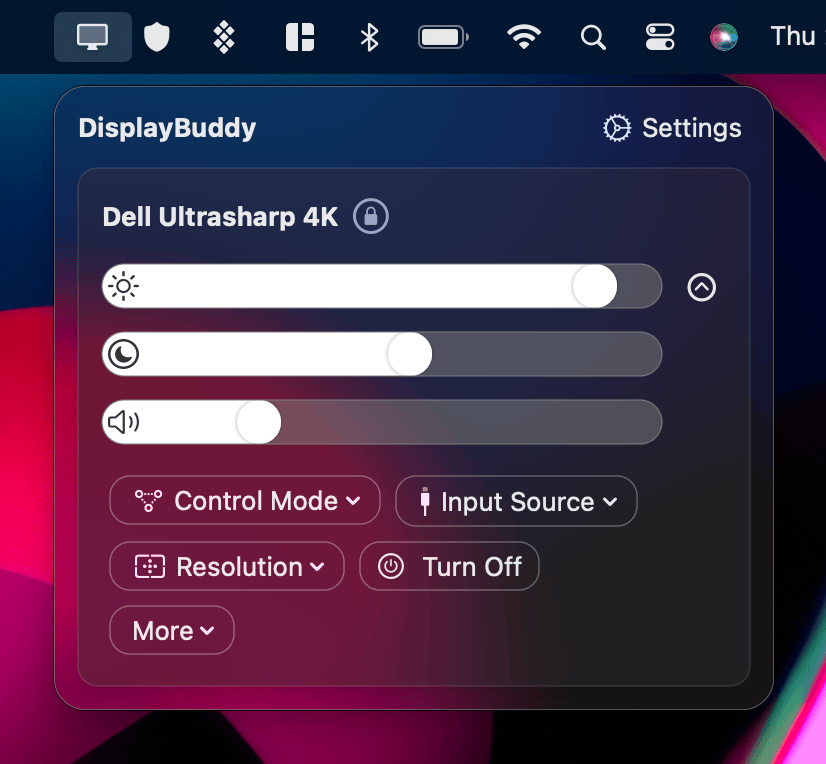
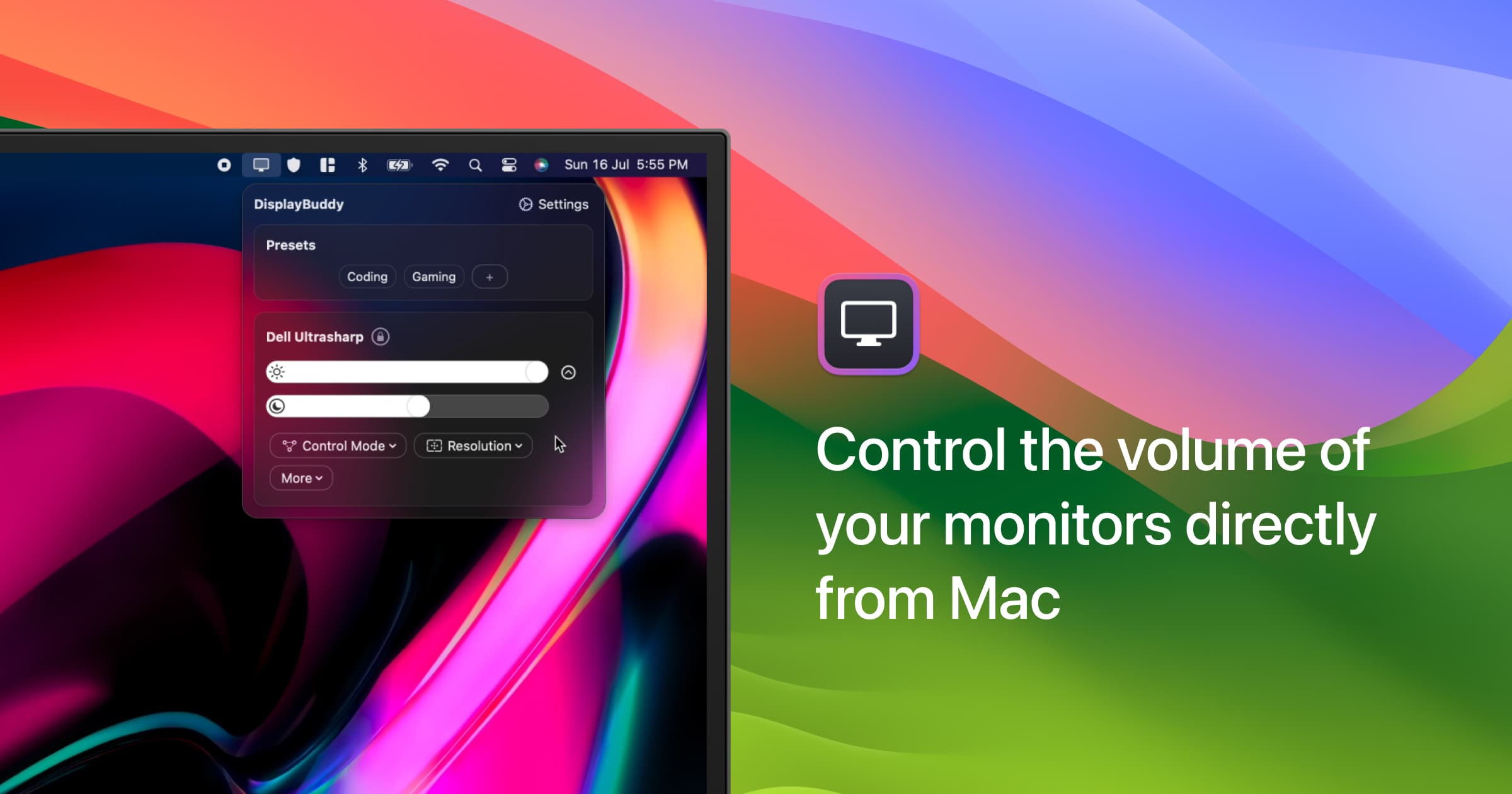
DisplayBuddy is the smarter way to control your monitors. It talks to your Philips display over DDC/CI so you can adjust volume from macOS directly - no OSD, no fumbling, no immersion break.
How to Change Your Philips Monitor's Volume Without the Buttons
- Download DisplayBuddy and install it on your macOS machine. The free trial gives you full control of every connected display.
- Open DisplayBuddy. Your Philips monitor appears automatically in the menu bar - no driver install, no OSD trip needed.
- Adjust the volume slider or assign a keyboard shortcut for one-tap control. Changes apply instantly, even mid-game or mid-call.
Volume Control Made Easy
Here's how DisplayBuddy upgrades your volume control:
- Effortless adjustments: change your monitor volume with a few clicks.
- Brightness keys for external displays: your Mac's F1/F2 keys control your Philips monitor the same way they control a built-in display.
- Multi-monitor sync: set one display as the source and the rest follow volume changes automatically.
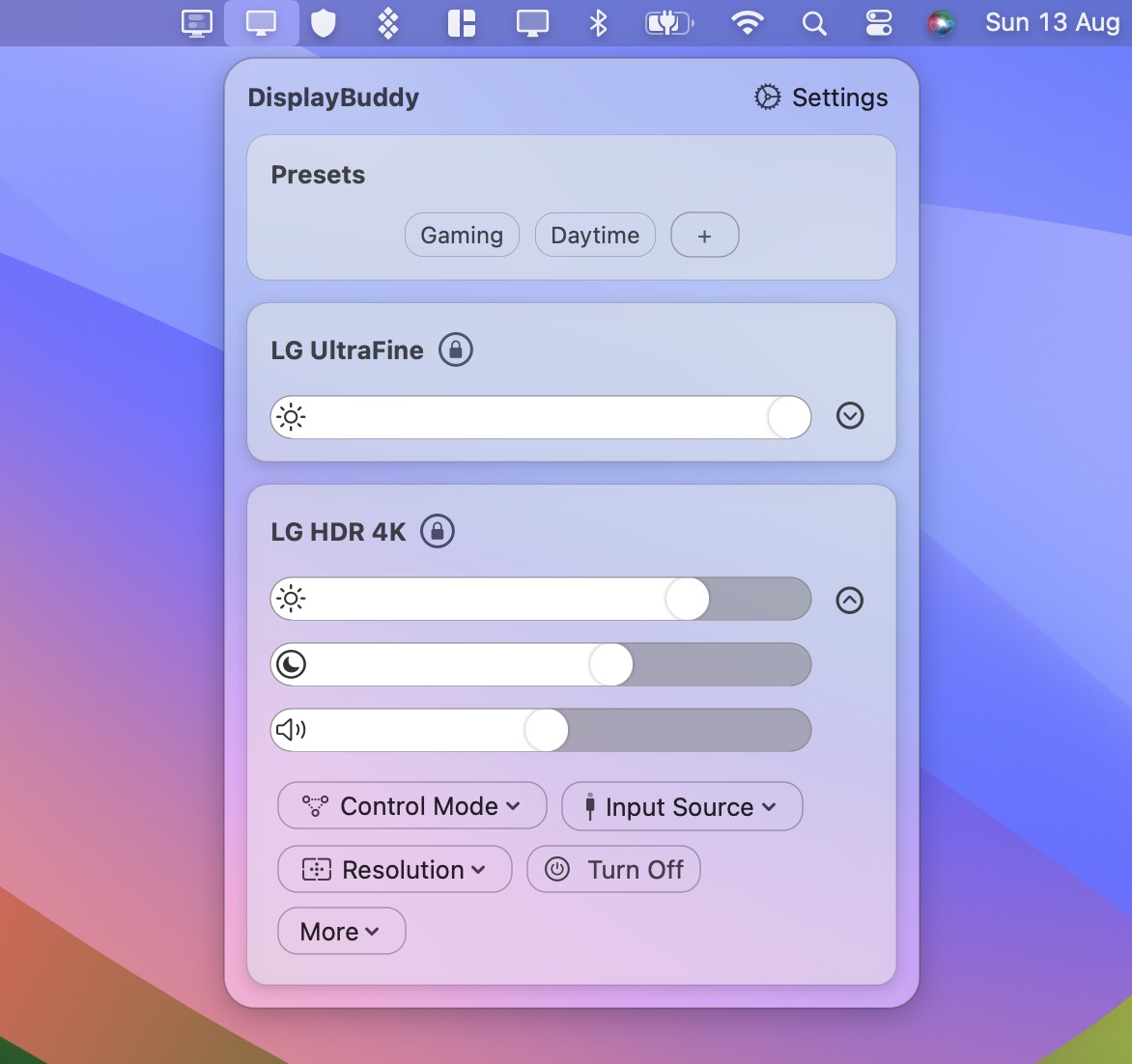
- Presets: save a full multi-monitor state and switch back to it with one click - Work, Movie, Night, Gaming.
Example: imagine you're working late. With DisplayBuddy, a single click activates your Night preset, instantly lowering brightness and softening contrast across every monitor in your setup.
Common Philips Monitor Volume Issues - and Quick Fixes
- Philips volume slider missing? Either your model has no built-in speakers, or it doesn't expose volume over DDC/CI. The Top Models list below shows what's confirmed working.
- Volume changes but no sound? Set the monitor as the active output device in macOS sound settings - the slider works, but macOS is still routing audio elsewhere.
- Keyboard volume keys don't change monitor volume? Map them inside DisplayBuddy → Preferences → Keyboard. By default macOS routes those keys to system volume only.
Philips SmartControl vs DisplayBuddy
Philips SmartControl is Windows-only and limited to select Philips monitors. DisplayBuddy works on Mac and Windows across every brand, with keyboard control and multi-monitor sync built in.
Top Philips Models Supported by DisplayBuddy
DisplayBuddy has been tested with a wide range of monitors across multiple brands. It works even if you have multiple monitors of different brands in your setup.
Here are some of the Philips monitor models that DisplayBuddy can seamlessly control on macOS:
- PHL 276E8V
- PHL 278E1
- PHL 328E1
- PHL 346B1C
- PHL 288E2
- PHL 279P1
- PHL 223V5
- PHL 499P9
Of course, DisplayBuddy can control a lot more Philips models than the short list above, so there's no harm in trying it out - if it doesn't work with your monitor, you get a full refund within 7 days on full-price purchases, no questions asked.
DisplayBuddy does a lot more
You can do a lot more with DisplayBuddy than just controlling monitor volume:
- Control the real brightness, contrast and volume of your monitors - and use keyboard brightness and volume keys.
- Sync controls across multiple displays - make every monitor follow one monitor's brightness or contrast.
- Create Presets - save settings across multiple displays and restore them with a single click.
- Use Siri to control your monitors - "Hey Siri, set all my displays to 80% brightness".
- Simple, intuitive design that works on macOS Big Sur and above, and Windows 10 and 11.
And so much more. Here's the full list of things you can do with DisplayBuddy.
Philips Monitor Volume on macOS - FAQ
Why can't I change my Philips monitor's volume?
The usual causes are DDC/CI being disabled in the monitor's OSD, an HDR session locking the brightness slider on Windows, a picture mode preset overriding manual control, or a USB-C dock dropping DDC commands. DisplayBuddy detects each of these and either works around them automatically or tells you exactly which OSD setting to flip.
How do I adjust Philips monitor volume from my Mac keyboard?
Install DisplayBuddy, open Preferences, and map your Mac's F1 and F2 keys (or any combo) to brightness or volume. The keys then control your Philips display the same way they control a built-in MacBook screen. The brightness keys guide walks through the exact setup.
Does the volume slider work for Philips monitors without built-in speakers?
No. If the panel has no speakers, there is no volume to control. The Top Models list shows Philips models with speakers that DisplayBuddy has been tested against. If you are routing audio out through the monitor to a separate device, set the monitor as your audio output and the slider will control the chain end to end.
Will this work for every Philips monitor model?
DisplayBuddy works with any Philips monitor that supports DDC/CI, which covers most models from the past several years. The list above shows what we have explicitly tested. If your specific Philips model is not supported, you get a full refund within 7 days on full-price purchases, no questions asked.
Is DisplayBuddy free?
DisplayBuddy is a one-time paid app with a free trial. One license covers both Mac and Windows, and there is a 7-day refund window on full-price purchases.
Can DisplayBuddy sync volume across multiple Philips monitors?
Yes. Set one display as the source and DisplayBuddy will follow volume changes across every Philips (or other brand) monitor in your setup. You can also save the full multi-monitor state as a Preset and switch back to it in one click.
Related Philips Guides
- Control Philips monitor brightness on macOS
- Control Philips monitor contrast on macOS
- Control Philips monitor volume on Windows
- Use your volume keys for external monitor volume
DisplayBuddy
for macOS 10.13+
Take control of your monitors
Control brightness, contrast, volume, and much more.
Buy NowLifetime license • 7-day refund on full-price purchases