How to Control External Monitor Volume (Mac & Windows)
Mac volume keys don't reach your monitor's speakers. Fix it in 60 seconds with DisplayBuddy. Works with Dell, LG, Samsung, AOC, and any DDC/CI display.
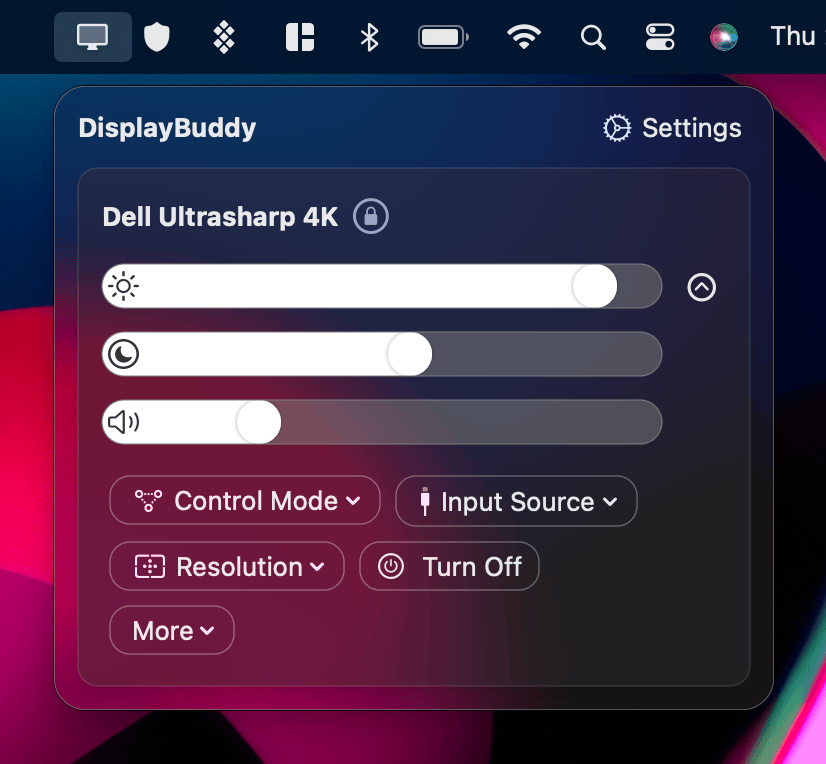
Your keyboard's volume keys do not control your external monitor's speakers by default. They only adjust system audio output. DisplayBuddy intercepts the volume keys and sends DDC/CI commands directly to your monitor's built-in speaker amplifier in about 60 seconds, on both Mac and Windows. Below: the setup, brand-specific notes for Dell, AOC, Samsung, and LG, troubleshooting for common issues, and answers to the most-searched questions.
| Feature | Supported |
|---|---|
| 💻 Mac models | MacBook, Mac Mini, Mac Studio, Mac Pro (all Macs supported) |
| 🪟 Windows PCs | Laptops and desktops with DisplayBuddy for Windows |
| ⌨️ Keyboards | MacBook built-in, Apple Magic Keyboard, Logitech MX Keys, any keyboard with volume keys |
| 🖥️ Monitors | Any DDC/CI-compatible display with built-in speakers (Dell, LG, Samsung, AOC, BenQ, ASUS, HP, and more) |
| 🔌 Connection | HDMI, USB-C, DisplayPort, Thunderbolt |
| 🎚️ Controls | Volume up, volume down, mute |
Why Volume Keys Don't Work on External Monitor Speakers
When you press the volume keys on a Mac or Windows keyboard, the OS adjusts the system audio output level. That is the level coming out of your built-in laptop speakers, headphones, or whichever output device is currently active. It is a software-level mixer, not a command to any specific speaker.
External monitors with built-in speakers run their own amplifier on the panel. To change that amplifier's volume, you have to send a hardware command over DDC/CI (Display Data Channel Command Interface). DDC/CI is the standard most external monitors use for software-controlled brightness, contrast, and volume. macOS and Windows do not natively send DDC/CI volume commands when you press the volume keys, so the keys never reach the monitor.
DisplayBuddy bridges the gap. When you press the volume keys, DisplayBuddy intercepts the keypress and sends a DDC/CI volume command to your external monitor's speakers. The OS system volume slider continues to work as normal for whichever output device is selected.
How to Enable Volume Keys for External Monitors
Setting this up takes about 60 seconds on Mac:
- Open DisplayBuddy and click the Settings icon
- Go to Preferences, then Keyboard Shortcuts
- Check "Use Volume keys to control volume for external displays"
- macOS will prompt for Accessibility permissions. Go to System Settings, then Privacy and Security, then Accessibility, and enable DisplayBuddy
- Press your volume up, volume down, or mute keys. They now control your external monitor's speakers
On Windows? DisplayBuddy for Windows supports the same DDC/CI volume control over external monitor speakers. Install the app, enable the feature in Preferences, and use your keyboard volume keys to adjust the monitor's volume. See the DisplayBuddy for Windows page.
Volume Control for Specific Monitor Brands
DisplayBuddy works with any DDC/CI-compatible monitor that has built-in speakers. A few brand notes for the most-searched setups:
Dell
Most Dell monitors with built-in speakers expose volume over DDC/CI, including the UltraSharp U-series (U2720Q, U2723DE, U3219Q, U3818DW), the SE/S-series with speakers, and the P-series with sound bars. Volume up, volume down, and mute all route through DisplayBuddy. See the dedicated guide: Control Dell monitor volume on macOS and on Windows.
AOC
AOC monitors with built-in speakers (popular gaming and home-office models) also expose DDC/CI volume control. The standard setup applies: enable Volume Keys in DisplayBuddy and the keypresses will reach the AOC speakers directly. See AOC volume on macOS and AOC volume on Windows.
Samsung
Standard Samsung monitors with speakers use DDC/CI and work the same way as Dell and AOC. Samsung Smart Monitors (M5, M7, M8, M9, ViewFinity S9, Odyssey OLED G9, Odyssey Ark) are a special case: they do not support DDC/CI, but DisplayBuddy controls them over Wi-Fi instead. See the dedicated guide: Control Samsung Smart Monitor from Mac, plus non-Smart Samsung volume on macOS and on Windows.
LG
LG monitors with built-in speakers, including the UltraFine 4K and 5K models commonly used with MacBooks, support DDC/CI volume control. The UltraFine 5K reports as a USB audio device but DisplayBuddy still controls its volume over DDC/CI. See LG volume on macOS and LG volume on Windows.
Troubleshooting Volume Control
No sound from your monitor speakers at all
Before debugging the volume keys, confirm that audio is actually routed to your monitor. On Mac, open System Settings, then Sound, then Output, and select your monitor's name. On Windows, right-click the speaker icon in the system tray, choose Sound settings, and pick the monitor as the output device. If the monitor is not listed, plug the cable directly into a port on your computer instead of going through a dock.
Monitor speakers are muted in the OSD
Most monitors have an internal mute toggle in the on-screen display menu, separate from the OS-level mute. Use the monitor's physical buttons to open the OSD, find the audio section, and confirm the speakers are not muted at the hardware level.
Volume keys work for Mac speakers but not the monitor
This is the most common case before DisplayBuddy is enabled. Open DisplayBuddy, go to Preferences, then Keyboard Shortcuts, and check "Use Volume keys to control volume for external displays". Grant Accessibility permission when prompted.
Monitor is connected through a USB-C dock or DisplayLink hub
Some docks and DisplayLink hubs strip DDC/CI commands before they reach the monitor. If the volume keys do not work for a docked monitor but work for one connected directly, the dock is the problem. Connect the monitor directly via HDMI, USB-C, or DisplayPort instead of through the dock, or switch to a different dock that passes DDC/CI through.
DDC/CI is disabled in the monitor's OSD
A small minority of monitors ship with DDC/CI disabled in the OSD. Open the monitor's OSD with the physical buttons, find the "DDC/CI" or "External Control" setting in the Setup or System menu, and switch it to On.
Going Further: Brightness Keys, Presets, and Sync
Volume keys are one shortcut. Once you have them working, three DisplayBuddy features take things further:
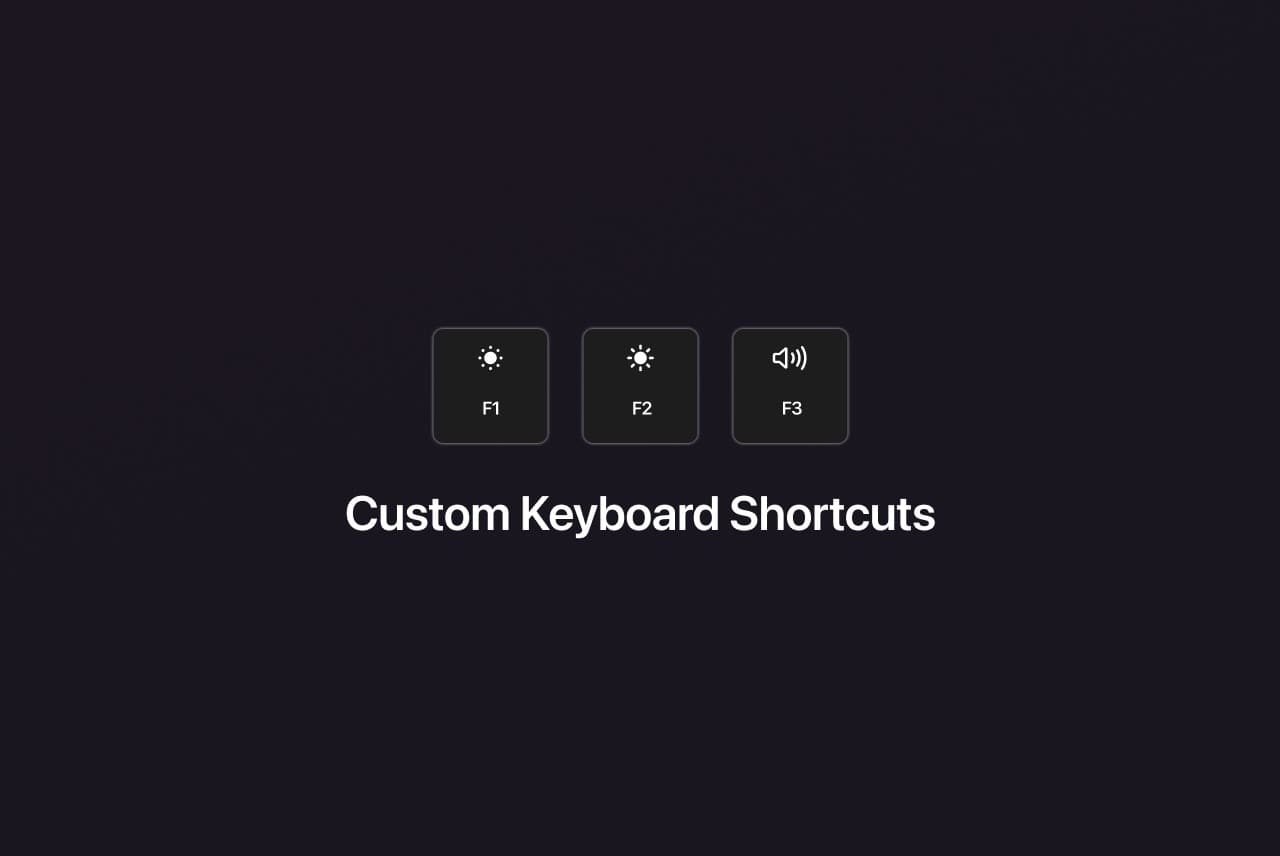
- Brightness keys route the same way as volume keys. Enable both in DisplayBuddy's Keyboard Shortcuts settings and your keyboard controls brightness and volume on every external monitor.
- Presets save brightness, contrast, and volume as named profiles. Save a "Work" preset at 80% brightness and 40% volume, an "Evening" preset at 30% brightness with volume muted, then switch between them with one keypress.
- Sync keeps multiple monitors consistent. Adjust the volume on one monitor and the others follow at the same level.
Frequently Asked Questions
Why is there no sound from my monitor speakers?
The most common cause is that audio is not routed to the monitor. On Mac, open System Settings, then Sound, then Output, and select the monitor as the output device. On Windows, right-click the speaker icon in the system tray, choose Sound settings, and pick the monitor. If the monitor is not listed as an option, the audio cable or HDMI/DisplayPort connection may not be carrying audio. Plug directly into your computer instead of going through a dock, and make sure the monitor's internal mute is not set in its OSD menu.
How do I control the volume on my Dell monitor?
Dell monitors with built-in speakers support DDC/CI volume control on both Mac and Windows. Install DisplayBuddy, enable "Use Volume keys to control volume for external displays" in Preferences, and your keyboard's volume keys will adjust the Dell's speaker volume directly. The UltraSharp U-series, P-series with sound bars, and SE-series with speakers all work this way. See the dedicated guide on controlling Dell monitor volume on macOS.
How do I control the volume on my monitor?
Two options. Use the monitor's physical OSD buttons, which is slow and inconvenient. Or install DisplayBuddy and use your keyboard's volume keys. With DisplayBuddy enabled, pressing volume up, volume down, or mute sends a DDC/CI command directly to your monitor's speaker amplifier, just like pressing the OSD buttons but from your keyboard. Works on Mac and Windows with any DDC/CI-compatible monitor that has built-in speakers.
Does Dell monitor have built-in speakers?
Many Dell monitors do, but not all. The UltraSharp U-series (U2720Q, U2723DE, U3219Q, U3818DW, and similar), the P-series with sound bars (P2422HE Sound Bar, P3424WEB), and the SE-series with speakers all include built-in speakers. The basic E-series and most gaming AW Alienware monitors do not. Check the model's spec sheet on Dell.com for "Built-in speakers" or "Speakers" before purchase. If your monitor has speakers, DisplayBuddy controls their volume via DDC/CI.
How do I unmute my Dell monitor?
Three places to check, in order. First, the OSD: open the monitor menu with the physical buttons, find the Audio section, and confirm the internal speaker mute is off. Second, the OS: on Mac, open System Settings, then Sound, and unmute the output; on Windows, right-click the speaker icon and unmute. Third, the cable: confirm the connection to your monitor carries audio (HDMI, USB-C, DisplayPort, and Thunderbolt all do, but some cheap adapters strip the audio channel).
Can you control monitor volume from PC?
Yes, on Windows with DisplayBuddy for Windows. Volume keys, brightness keys, and mute can all route to a DDC/CI-compatible external monitor's built-in speakers. One DisplayBuddy license covers both Windows and Mac, with a 7-day free trial on Windows.
How to adjust monitor volume without remote?
If your monitor has built-in speakers and supports DDC/CI, your keyboard's volume keys are the most direct option. Install DisplayBuddy, enable the volume-key feature, and the keys will adjust the monitor's speaker amplifier directly. No remote, no OSD buttons, no extra hardware. For Samsung Smart Monitors (M5, M7, M8, ViewFinity S9, Odyssey OLED G9), DisplayBuddy connects over Wi-Fi instead of DDC/CI but otherwise works the same way.
DisplayBuddy
for macOS 10.13+
Take control of your monitors
Control brightness, contrast, volume, and much more.
Buy NowLifetime license • 7-day refund on full-price purchases