How to Change ASUS Monitor Brightness Without the Buttons (Windows)
Control ASUS monitor brightness from Windows without the OSD menu. Keyboard shortcut, presets, and multi-monitor sync, with DisplayBuddy.
📖 Complete Windows Guide: For the full overview of controlling monitor settings on Windows PCs, including shortcuts and multi-monitor sync, see our main DisplayBuddy for Windows page.
Are you on Windows, using a ASUS monitor? Ever wish you could change the brightness without reaching for the buttons behind your monitor?
The ASUS OSD is the kind of menu nobody wants to navigate - tiny labels, awkwardly placed buttons, and a joystick that flicks the wrong direction half the time. There is a faster way.
Effortlessly Adjust Your ASUS Monitor's Brightness
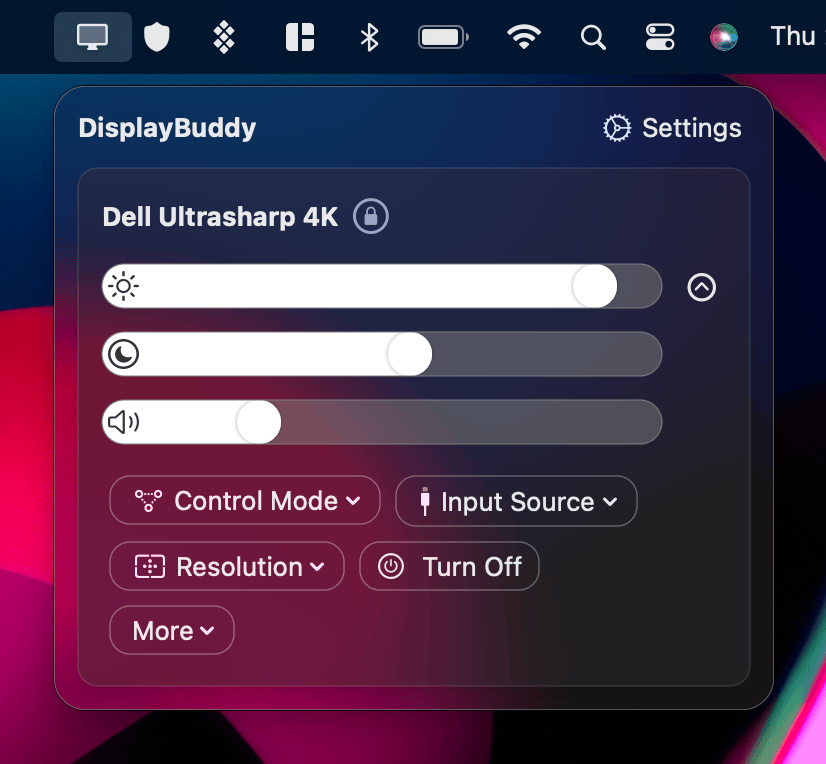
DisplayBuddy is the smarter way to control your monitors. It talks to your ASUS display over DDC/CI so you can adjust brightness from Windows directly - no OSD, no fumbling, no immersion break.
How to Change Your ASUS Monitor's Brightness Without the Buttons
- Download DisplayBuddy and install it on your Windows machine. The free trial gives you full control of every connected display.
- Open DisplayBuddy. Your ASUS monitor appears automatically in the system tray - no driver install, no OSD trip needed.
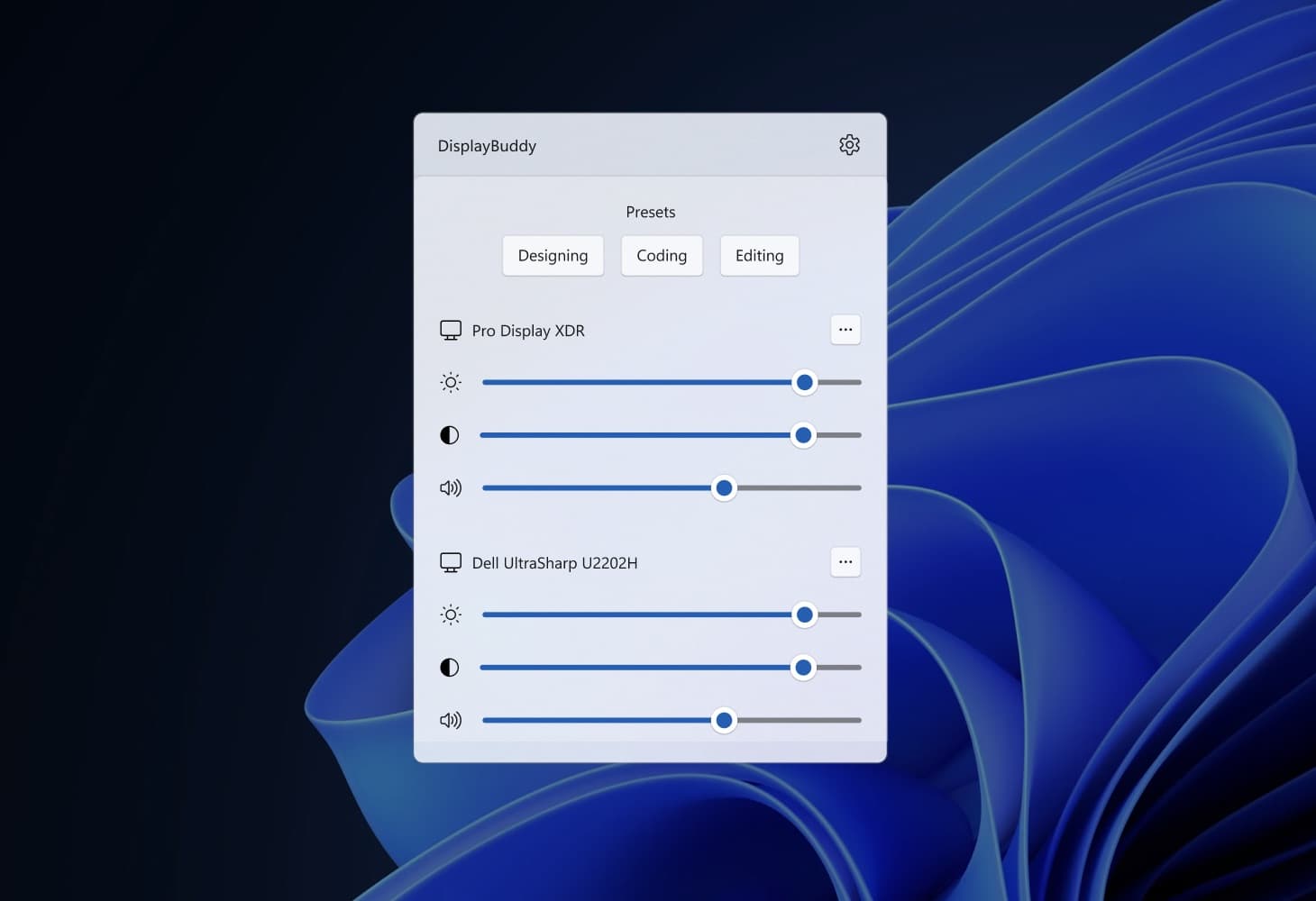
- Adjust the brightness slider or assign a keyboard shortcut for one-tap control. Changes apply instantly, even mid-game or mid-call.
Brightness Control Made Easy
Here's how DisplayBuddy upgrades your brightness control:
- Effortless adjustments: change your monitor brightness with a few clicks.
- Keyboard control: map any key combo to brightness and volume on Windows - even in full-screen apps and games.
- Multi-monitor sync: set one display as the source and the rest follow brightness changes automatically.
- Presets: save a full multi-monitor state and switch back to it with one click - Work, Movie, Night, Gaming.
Example: imagine you're working late. With DisplayBuddy, a single click activates your Night preset, instantly lowering brightness and softening contrast across every monitor in your setup.
Common ASUS Monitor Brightness Issues - and Quick Fixes
- ASUS brightness slider not appearing? Check that DDC/CI is enabled in the monitor's OSD - it's on by default on most ASUS models, but a factory reset can switch it off. Look under Settings → Other → DDC/CI.
- Brightness greyed out or "not available"? On Windows this usually means HDR is on, which locks the standard DDC/CI brightness control. DisplayBuddy detects this and falls back to software dimming so you keep full range without leaving HDR.
- Brightness resets after sleep or wake? A known DDC/CI quirk on Windows - the monitor drops its last value when the link re-handshakes. DisplayBuddy re-applies your last brightness automatically the moment the display reconnects.
- Brightness changes lag through a USB-C dock? Some Thunderbolt and USB-C docks drop DDC/CI commands. Try a direct cable to confirm, then enable Slow DDC in DisplayBuddy if you want to keep the dock.
ASUS HDR Brightness on Windows - the Locked-Slider Problem
The moment you flip Windows HDR on, the standard DDC/CI brightness slider on your ASUS display stops responding. That is a Windows behavior, not a ASUS bug - the OS now owns the brightness pipeline. DisplayBuddy detects HDR mode and switches to software dimming so you keep a full brightness range without leaving HDR, and ships a dedicated HDR-brightness key combo so you can dim only the HDR layer.
ASUS DisplayWidget Center vs DisplayBuddy
DisplayWidget Center is ASUS's Windows-only utility for select ASUS and ProArt models. DisplayBuddy works on Mac and Windows, supports the full ASUS range including ROG and TUF, and adds keyboard shortcut control plus presets.
Top ASUS Models Supported by DisplayBuddy
DisplayBuddy has been tested with a wide range of monitors across multiple brands. It works even if you have multiple monitors of different brands in your setup.
Here are some of the ASUS monitor models that DisplayBuddy can seamlessly control on Windows:
- ASUS PB278
- ASUS PB287Q
- ASUS VS247
- MX279
- ASUS PB277
- ROG PG279Q
- VG248
- VE248
Of course, DisplayBuddy can control a lot more ASUS models than the short list above, so there's no harm in trying it out - if it doesn't work with your monitor, you get a full refund within 7 days on full-price purchases, no questions asked.
DisplayBuddy does a lot more
You can do a lot more with DisplayBuddy than just controlling monitor brightness:
- Control the real brightness, contrast and volume of your monitors - and use keyboard brightness and volume keys.
- Sync controls across multiple displays - make every monitor follow one monitor's brightness or contrast.
- Create Presets - save settings across multiple displays and restore them with a single click.
- Use Siri to control your monitors - "Hey Siri, set all my displays to 80% brightness".
- Simple, intuitive design that works on macOS Big Sur and above, and Windows 10 and 11.
And so much more. Here's the full list of things you can do with DisplayBuddy.
ASUS Monitor Brightness on Windows - FAQ
Why can't I change my ASUS monitor's brightness?
The usual causes are DDC/CI being disabled in the monitor's OSD, an HDR session locking the brightness slider on Windows, a picture mode preset overriding manual control, or a USB-C dock dropping DDC commands. DisplayBuddy detects each of these and either works around them automatically or tells you exactly which OSD setting to flip.
How do I adjust ASUS monitor brightness from my keyboard on Windows?
Windows does not ship dedicated monitor brightness keys, but DisplayBuddy lets you assign any combo - for example Ctrl+F1 to dim and Ctrl+F2 to brighten. The shortcut works system-wide, including in full-screen apps and games.
Does DisplayBuddy work with HDR on my ASUS monitor?
Yes. When HDR is active the standard DDC/CI brightness slider usually locks (especially on Windows). DisplayBuddy detects this and switches to a software dimming fallback so you can still adjust perceived brightness without turning HDR off.
Will this work for every ASUS monitor model?
DisplayBuddy works with any ASUS monitor that supports DDC/CI, which covers most models from the past several years. The list above shows what we have explicitly tested. If your specific ASUS model is not supported, you get a full refund within 7 days on full-price purchases, no questions asked.
Is DisplayBuddy free?
DisplayBuddy is a one-time paid app with a free trial. One license covers both Mac and Windows, and there is a 7-day refund window on full-price purchases.
Can DisplayBuddy sync brightness across multiple ASUS monitors?
Yes. Set one display as the source and DisplayBuddy will follow brightness changes across every ASUS (or other brand) monitor in your setup. You can also save the full multi-monitor state as a Preset and switch back to it in one click.
Related ASUS Guides
- Control ASUS monitor contrast on Windows
- Control ASUS monitor volume on Windows
- Control ASUS monitor brightness on Mac
- DisplayBuddy for Windows - overview
- Monitor brightness control - all methods
DisplayBuddy
for macOS 10.13+
Take control of your monitors
Control brightness, contrast, volume, and much more.
Buy NowLifetime license • 7-day refund on full-price purchases